Graded the way your experts would
Use your rubric and labeled examples so every eval is judged against the same standard, even as models and prompts change.
The evidence behind your AI release decisions. Hosted app or open-source CLI.
No credit card · bring your own keyRun the same check twice and the verdict can move. Plumloom makes the number trustworthy.
Use your rubric and labeled examples so every eval is judged against the same standard, even as models and prompts change.
Use multiple judges and see where they agree or disagree, so one model’s opinion does not decide the result.
Run enough evaluations to see whether the result is stable, with confidence intervals that separate real improvement from noise.
Evaluate the full context that matters, from a single response to a multi-turn conversation or complete agent trajectory.
Test how a model answers a prompt against your rubric, run enough times to separate a real result from a lucky one.
Check whether a multi-turn conversation reached the outcome you expected, graded turn by turn against your standard.
See whether your agent reached the right outcome, and for the right reasons. Outcome and path are scored separately, and you can import a run straight from your harness.
Trueline is for collaborative review and release decisions. Autoeval brings the same evaluation into the development workflow for fast, automated gating.
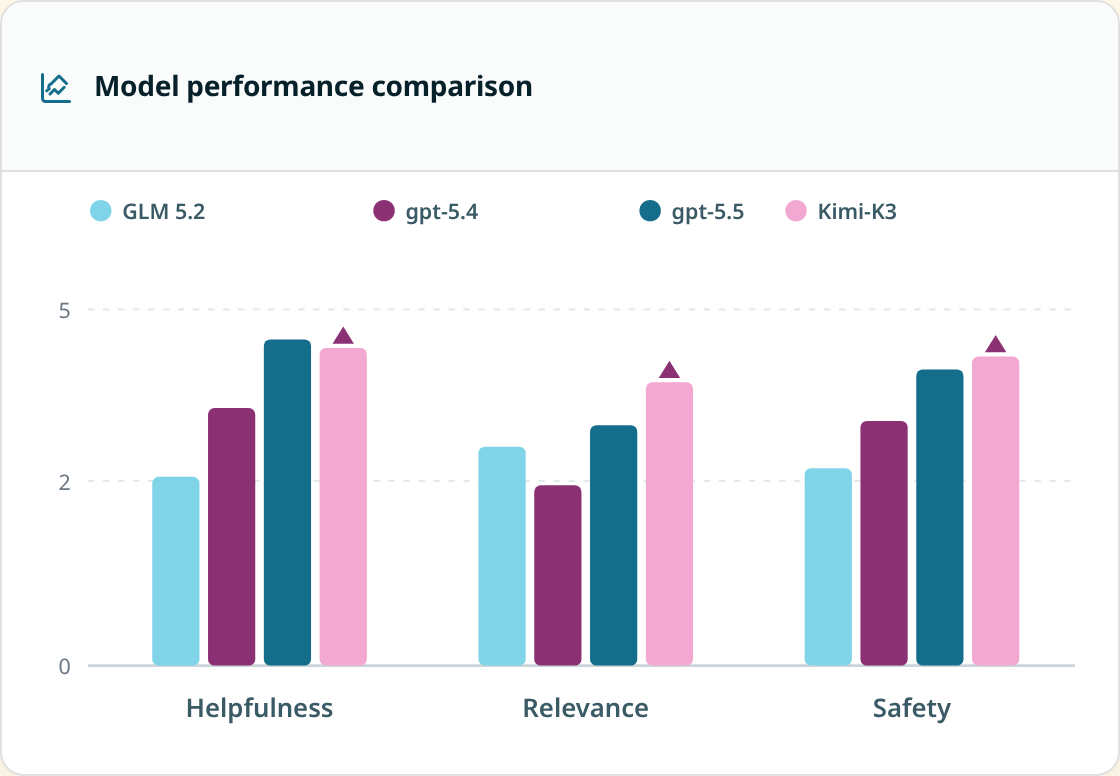
Review evidence and decide what is ready to ship. Compare models, inspect failures, and make release decisions with your team in a shared workspace.
Explore Trueline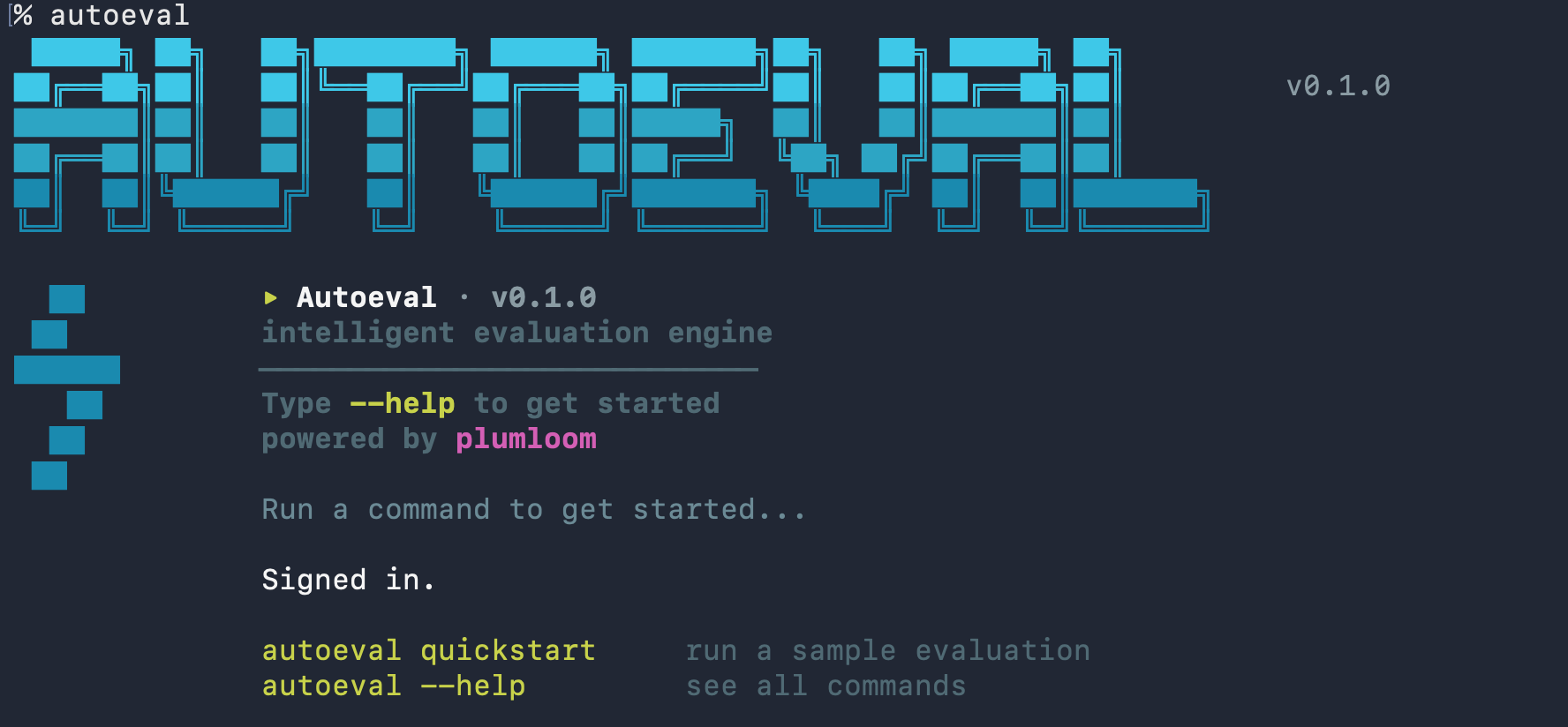
Bring release decisions into the development workflow. Run and gate evals from the terminal, CI, or an agentic harness in minutes.
Explore AutoevalFrameworks run your evaluation and give the runs back, leaving the judgment to you. Plumloom returns the judgment: calibrated, scored by several judges, and for scenarios placed with a confidence interval.
Observability shows what happened after a response ships, and needs your app instrumented first. Plumloom tells you whether to ship at all, before release, with a provider key and nothing to install.
It’s the trustworthiness of the evaluation itself, rather than of your AI. Judges are calibrated to a standard your experts set, several judges score each output so you see the agreement behind the number, and for scenarios the evaluation runs multiple trials and stops once the score is stable, then reports a confidence interval. Whether your agent behaves correctly at runtime is a separate job.
Two ways into the same engine. Trueline is the hosted UI for authoring and reviewing in a shared workspace. AutoEval is the open-source CLI for the terminal, CI, and coding agents. Both run on EvalCore, so the reliability is identical either way.
No. You bring the run: a scenario, a conversation transcript, or an agent trace your harness already produces. There’s no SDK to install and no logging pipeline to wire up first.
Bring your own key: OpenAI, Anthropic, or Together.ai. The models you select run on your key; there’s no provider markup.
Scenarios call the model live, so all three mechanisms apply, including statistical multi-run. Conversations and agent traces are fixed artifacts, so their reliability comes from the calibrated standard and multi-judge agreement. To put a frozen finding under multi-run, reproduce it as a scenario.
Compare the evidence, catch regressions, and decide what is ready to ship.